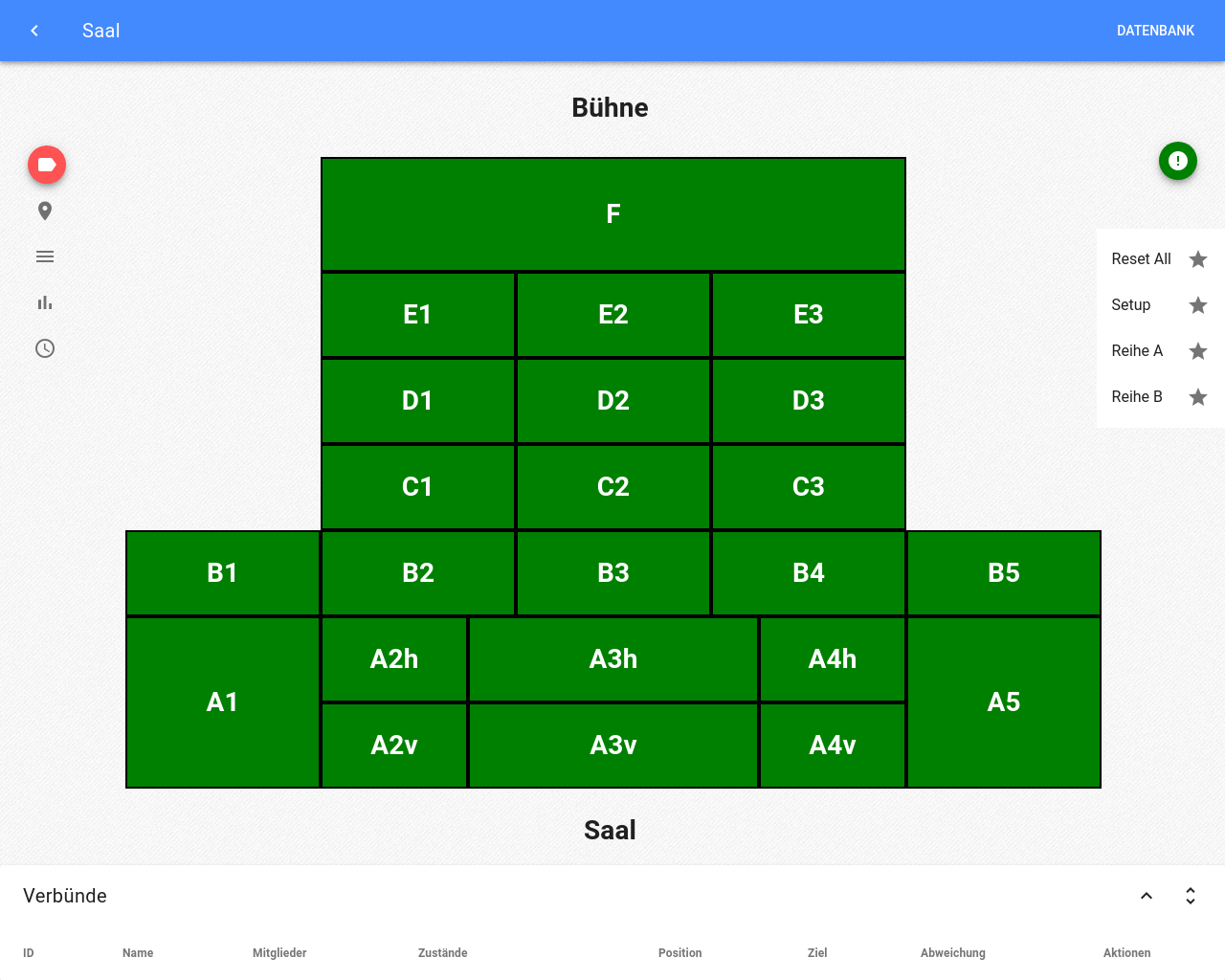
Since 2018, our automation solution has been controlling the stage technology at Casino Bern: 21 stage podiums of varying sizes, speed-controlled, flexibly arranged for different event formats.
The operating staff controls the system via touchscreen: select axes, press the travel button. Manual up and down travel or automatic position runs to stored target positions are both possible. Axes can be grouped together with their positions continuously monitored — if the axes drift too far apart, the system establishes a safe state and stops the movement.
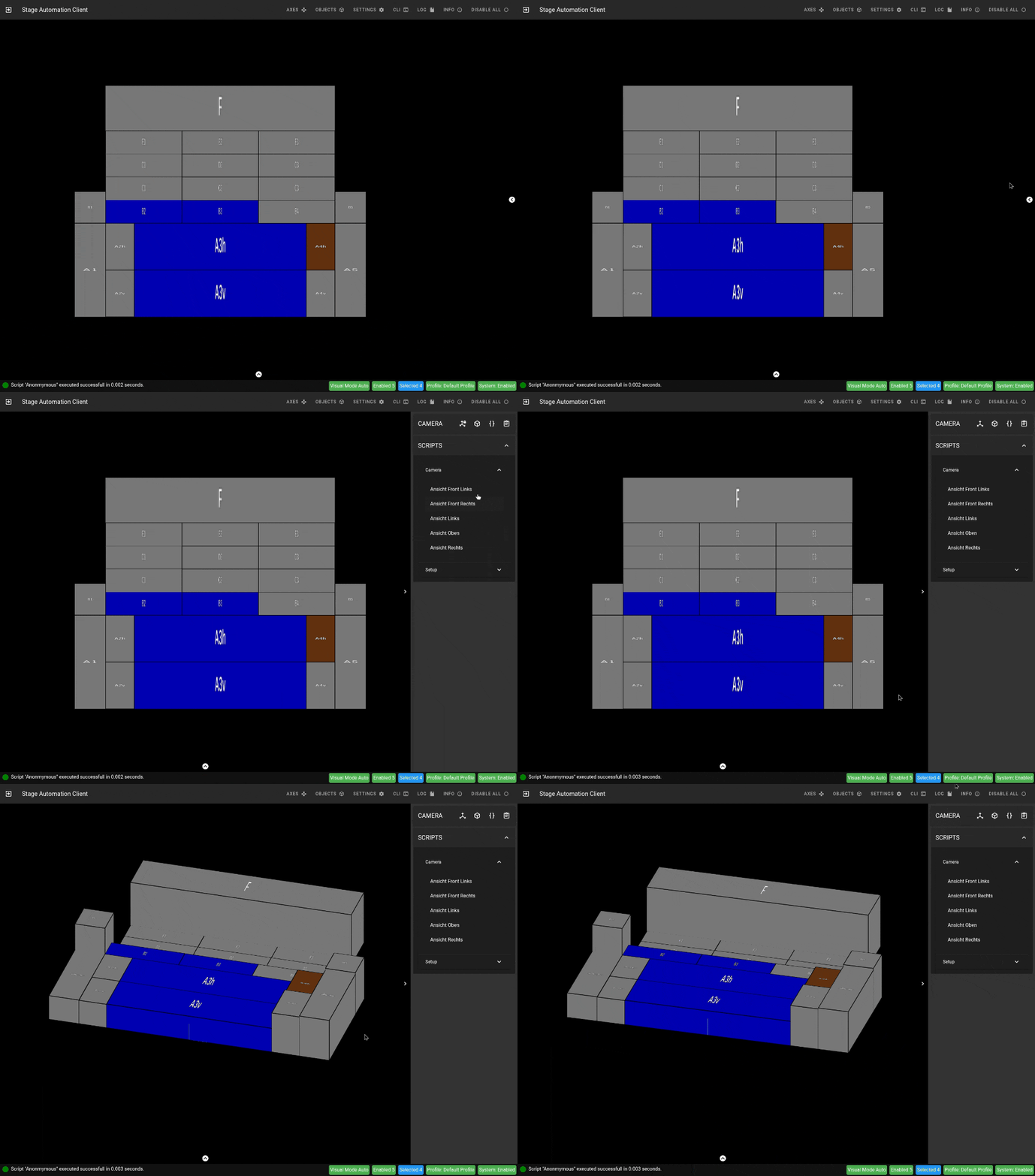
At the start of 2026, it was time to update the system on-site and bring the software up to the current version of our platform — so the venue can continue to benefit from support and future development.
The interesting part lies in the operator interface. In 2018, the HMI was a project-specific web application — functional, but a one-off solution for this one venue. Today, our 3D operator interface runs there: a reusable product that maps venue-specific workflows through configuration. The requirement was clear: the staff must be able to operate the system exactly as before. That has been achieved — all familiar functions are fully represented in the new interface, making the transition in day-to-day operations correspondingly unremarkable.
Since the update in early 2026, the system has been running in regular operation — without any issues.
“The transition to the new software went smoothly during live operation. Knowing that support for our system is there when we need it gives us a real sense of security.”
— Christian Schmid, Head of Facility Management, Casino Bern
That is precisely the point we care about: what in 2018 still had to be developed individually is today part of a product line. Configured rather than reprogrammed — with the same venue-specific depth.